Green Stink Bug: Identification, Behavior & How to Get Rid of It
Everything you need to know about green stink bugs, from identifying them to eliminating infestations and preventing their return.
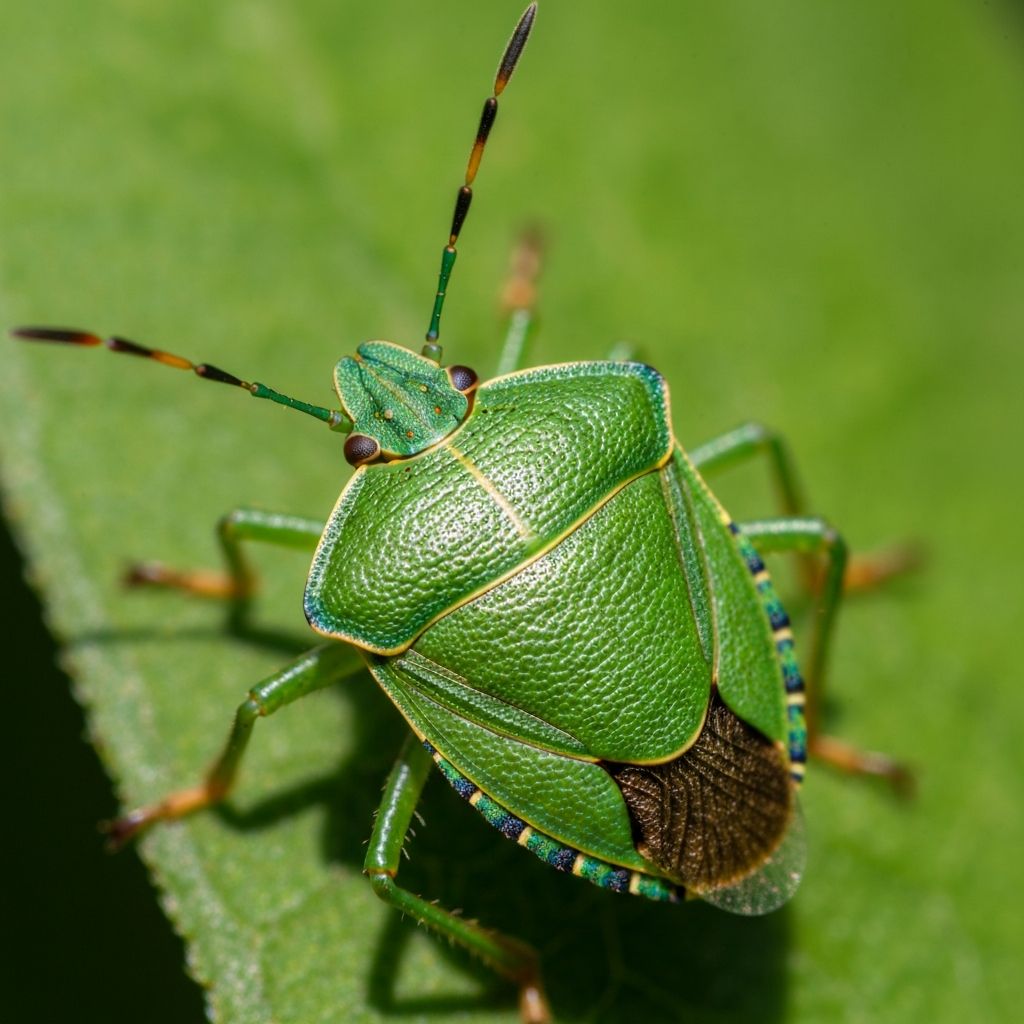
Quick Facts: Green Stink Bug
The green stink bug (Chinavia hilaris), also known as the green soldier bug, is one of the most common stink bug species in North America. Unlike the invasive brown marmorated stink bug, green stink bugs are native to this continent and have been a garden pest for centuries.
While they rarely cause serious damage to home gardens, green stink bugs can be a significant agricultural pest and become a nuisance when they invade homes in fall seeking shelter. This guide covers everything you need to know about identifying, understanding, and controlling green stink bugs effectively.
In This Guide
How to Identify Green Stink Bugs
Green stink bugs are relatively easy to identify once you know what to look for. Here are the key characteristics:
Physical Characteristics
- Shape: Shield-shaped body (characteristic of all stink bugs), roughly triangular when viewed from above
- Color: Bright, solid green on top with a yellowish-green underside. Some have narrow orange, yellow, or red edges along the sides
- Size: Adults measure 12-19 mm (roughly 0.5 to 0.75 inches) in length
- Antennae: Five-segmented antennae, often with black bands near the tips
- Wings: Two pairs of wings; front wings are partially hardened, back wings are membranous
Identification Tip: The distinctive foul odor released when disturbed is the easiest way to confirm you have a stink bug. The scent comes from glands on the thorax and is described as similar to cilantro or coriander.
Life Cycle & Behavior
Understanding the green stink bug life cycle helps you target control efforts at the most vulnerable stages.
Life Stages
| Stage | Duration | Description |
|---|---|---|
| Eggs | 5-7 days | Barrel-shaped, laid in clusters of 14-28 on leaf undersides |
| Nymph (5 instars) | 5-6 weeks | Black when young, gradually turning green; no wings |
| Adult | 6-8 months | Fully winged, bright green, reproductive |
Seasonal Behavior
- Spring: Adults emerge from overwintering sites and begin feeding and mating
- Summer: Peak activity; females lay 3-4 egg clusters; 1-2 generations per year depending on climate
- Fall: Adults seek warm overwintering sites, often entering homes through cracks and gaps
- Winter: Enter diapause (dormancy) in protected areas; may become active on warm days
Damage Caused by Green Stink Bugs
Green stink bugs feed using piercing-sucking mouthparts that inject digestive enzymes into plant tissue. While they rarely kill plants, they can cause significant cosmetic and economic damage.
Garden Damage
- Dimpled, discolored spots on tomatoes
- Cat-facing on peaches and apples
- Distorted bean pods
- Cloudy spots on peppers
- Reduced seed quality in soybeans
Home Nuisance
- Foul odor when disturbed or crushed
- Staining on fabrics and surfaces
- Buzzing noise when flying
- Congregation on sunny walls
- Can trigger allergies in some people
If you are dealing with significant crop damage, you may also want to review our pest control guides for integrated pest management strategies.
Green Stink Bug vs Other Stink Bugs
Several stink bug species are common in North America. Here is how to tell them apart:
| Species | Color | Origin | Key Feature |
|---|---|---|---|
| Green Stink Bug | Bright solid green | Native (N. America) | Orange/yellow edges |
| Brown Marmorated | Mottled brown | Invasive (Asia) | White antenna bands |
| Southern Green | Light green | Native (tropics) | Three pale spots on scutellum |
| Spined Soldier Bug | Brown/tan | Native (N. America) | Sharp shoulder spines; BENEFICIAL |
Important: The spined soldier bug looks similar but is actually a beneficial predator that eats pest insects. Check for the pointed shoulder spines before killing any stink bug.
How to Get Rid of Green Stink Bugs
Control methods vary depending on whether you are dealing with stink bugs in your garden or inside your home. Here are the most effective approaches:
Indoor Control
- 1Vacuum Them Up
Use a vacuum with a bag to collect stink bugs. Empty the bag immediately into an outdoor trash bin to prevent odor.
- 2Soapy Water Trap
Fill a bucket with soapy water and knock stink bugs into it. The soap breaks surface tension, causing them to drown without releasing odor.
- 3Light Traps
Commercial stink bug traps use light to attract bugs into a container. Effective for ongoing indoor problems. See our trap reviews for similar products.
- 4Never Crush Them
Crushing releases the defensive odor. Always use non-contact removal methods.
Garden Control
- Hand-Picking
For small infestations, knock bugs into soapy water in early morning when they are sluggish.
- Trap Crops
Plant sunflowers, mustard, or millet away from your main garden to draw stink bugs away.
- Row Covers
Lightweight fabric covers physically exclude stink bugs from vulnerable crops.
- Kaolin Clay Spray
Creates a particle film on plants that deters feeding. Organic and safe for edibles.
- Insecticides
Pyrethroid sprays are effective but should be a last resort. See our insecticide reviews for product recommendations.
Natural Remedies
Essential Oil Spray
Mix 10 drops of peppermint or neem oil with 2 cups water and spray around entry points. Reapply after rain.
Diatomaceous Earth
Sprinkle food-grade DE around foundations and entry points. It damages the bugs' exoskeleton, causing dehydration.
Garlic Spray
Blend 4 cloves garlic with 2 cups water, strain, and spray on plants. The strong smell repels stink bugs.
Neem Oil
Disrupts feeding and reproduction. Apply weekly to affected plants following label directions.
Prevention Tips
Preventing stink bug entry in fall is far easier than dealing with an indoor infestation. Focus on exclusion before temperatures drop.
Home Exclusion Checklist
- Seal cracks around windows, doors, and foundations with silicone caulk
- Install or repair window and door screens (use fine mesh)
- Add door sweeps to exterior doors
- Cover vents with fine mesh hardware cloth
- Seal gaps around utility pipes and wires
- Repair damaged siding and trim
- Check attic vents and chimney caps
For comprehensive home pest-proofing, see our complete pest control guides. You may also be interested in control methods for related pests like ants and cockroaches.
When to Call a Professional
Most green stink bug problems can be handled with DIY methods. However, consider professional help if:
- You find dozens of stink bugs inside your home daily
- Infestations return year after year despite exclusion efforts
- You have significant crop damage in a large garden or farm
- You cannot locate or seal entry points on your own
Frequently Asked Questions
Are green stink bugs harmful to humans?
Green stink bugs are not harmful to humans. They do not bite, sting, or transmit diseases. However, they can release a foul-smelling odor when disturbed or crushed, which some people find unpleasant. The smell is a defense mechanism and is not toxic.
What attracts green stink bugs to my home?
Green stink bugs are attracted to homes primarily in fall when seeking warm overwintering sites. They are drawn to light-colored surfaces, south-facing walls that absorb heat, and homes near agricultural areas or gardens with host plants like tomatoes, peppers, and beans.
How do I get rid of green stink bugs naturally?
Natural methods include vacuuming them up (empty the bag immediately outside), using soapy water traps, sealing entry points, planting trap crops away from your home, and using essential oil sprays with mint or neem. Diatomaceous earth around entry points can also help.
What is the difference between green stink bugs and brown marmorated stink bugs?
Green stink bugs (Chinavia hilaris) are bright green with narrow orange or yellow edges, while brown marmorated stink bugs (Halyomorpha halys) are mottled brown with white bands on their antennae. Green stink bugs are native to North America, while brown marmorated stink bugs are invasive from Asia.
Do green stink bugs fly?
Yes, green stink bugs can fly. They have two pairs of wings, with the front pair being partially hardened. They typically fly short distances to find food or mates, and in fall, they may fly longer distances seeking overwintering sites in homes and structures.
What do green stink bugs eat?
Green stink bugs feed on over 100 plant species using their piercing-sucking mouthparts. They prefer fruits and vegetables including tomatoes, peppers, beans, corn, and soybeans. They also feed on tree fruits like apples and peaches, causing cosmetic damage called cat-facing.
Explore More Pest Solutions
Affiliate Disclosure: This article may contain affiliate links. If you purchase through our links, we may earn a commission at no extra cost to you. This helps us continue providing pest control information. Learn more.